Welcome to Our Park
Big things are happening in the park!
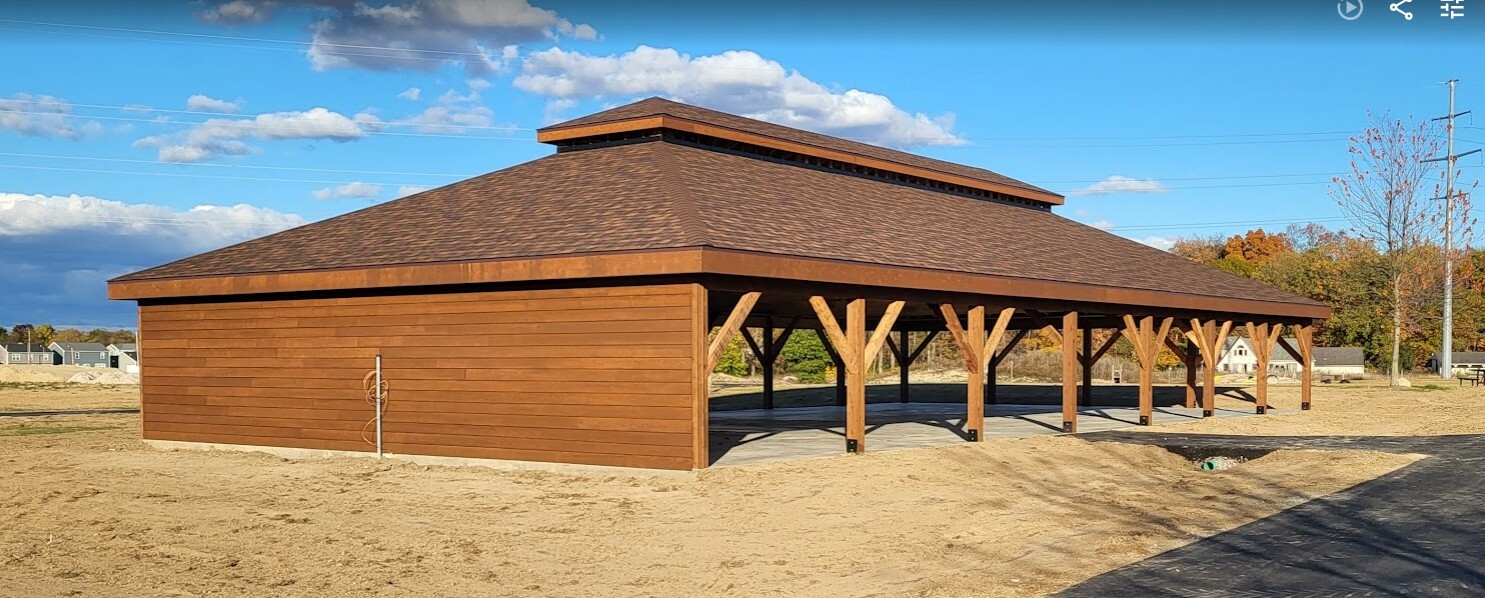
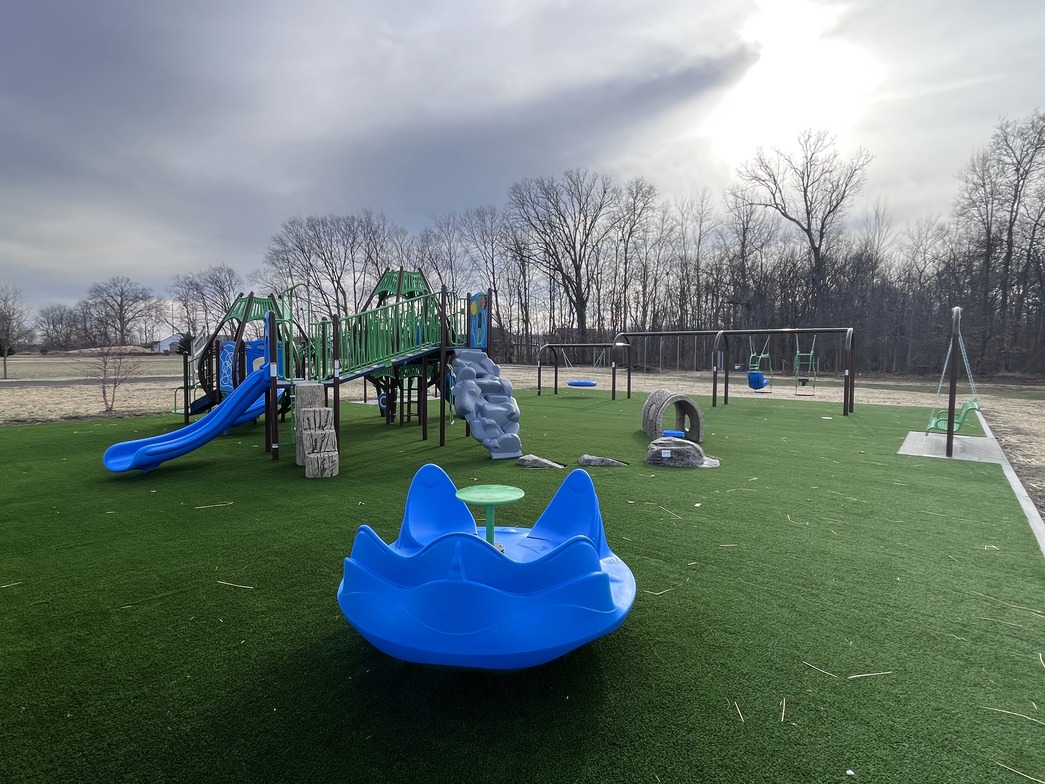
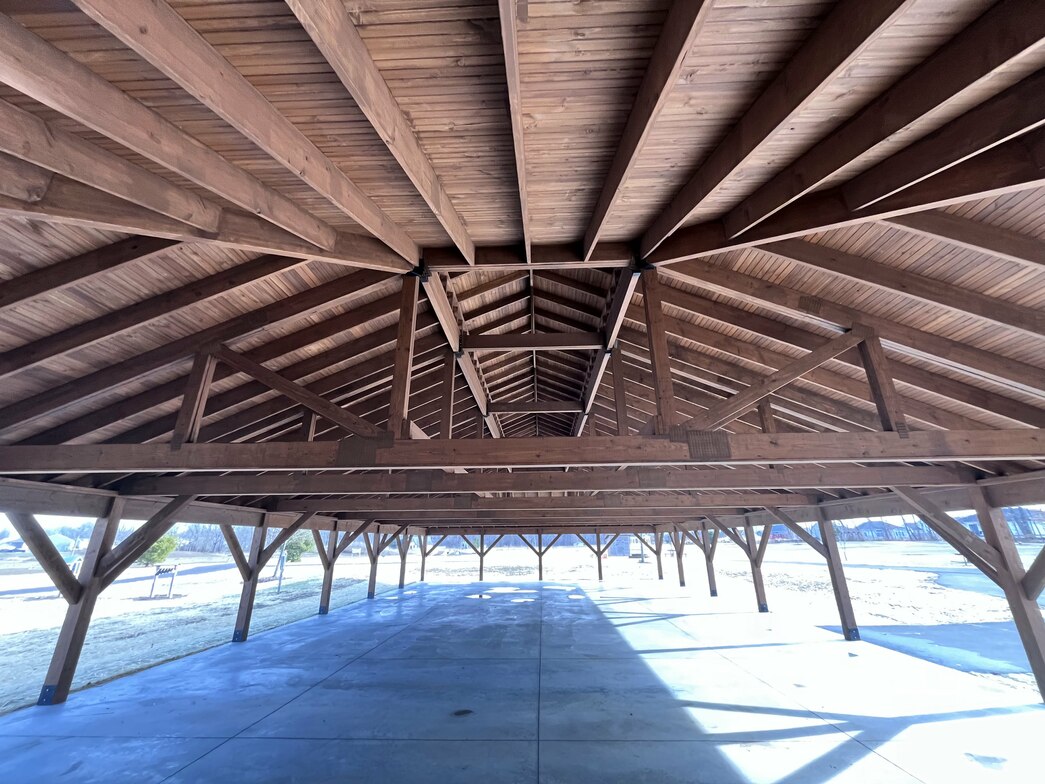
Progress has been made on our new pavilion and new playground equipment. Be on the lookout for new developments and activities happening in our wonderful outdoor space.
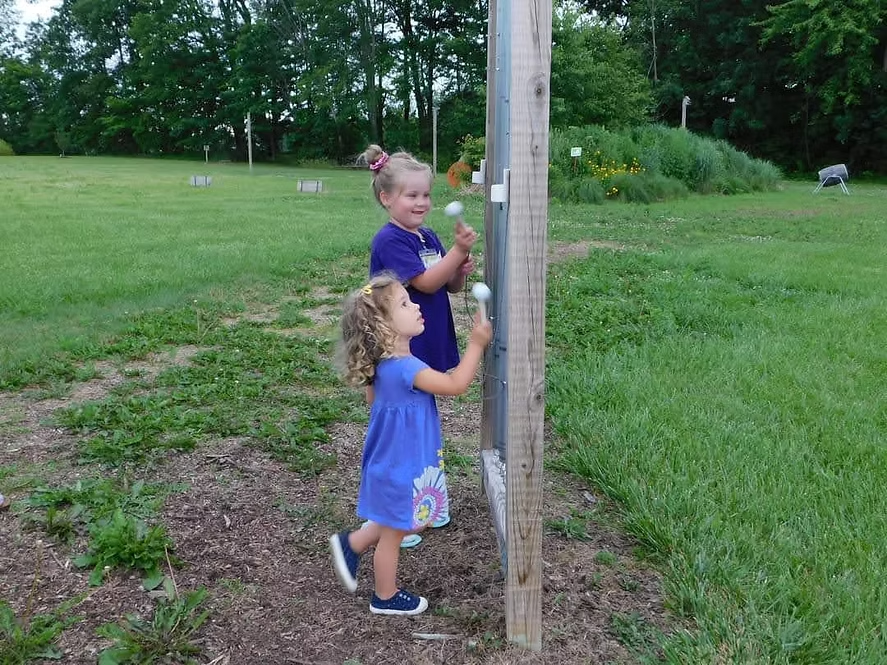
Our park sits on 5 acres behind the church and has 10 fitness stations, a fire pit, gardens, native plants that are a certified butterfly garden, horseshoe pit, 5 music stations, paths throughout the park, many donated trees in memory of loved ones, a labyrinth with a willow arch, a gazebo, mound slides play area, a hidden geocache, benches to relax and enjoy nature, a free little library, hopscotch and a basketball court, which is located in the parking lot on the south side of the church. We have worship in the park periodically.
The park is open to the public from dawn to dusk as there are currently no lights in the park.
It is our gift to the community for spiritual, emotional and physical health. Please be respectful of the space and carry out your trash.
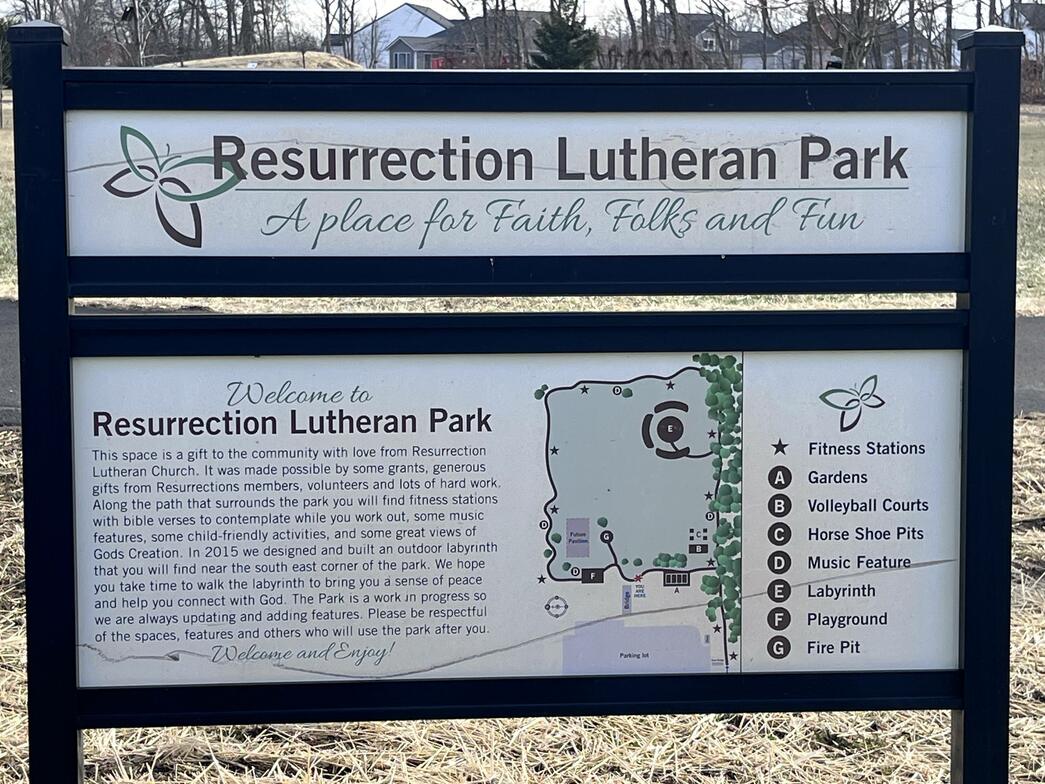
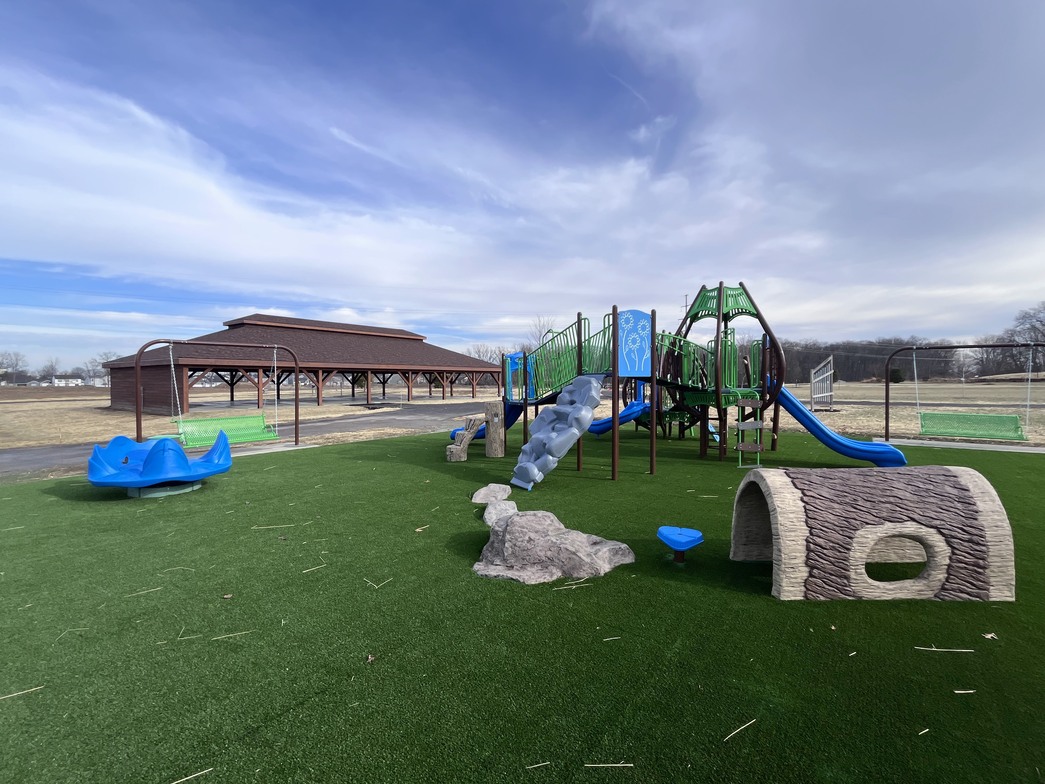
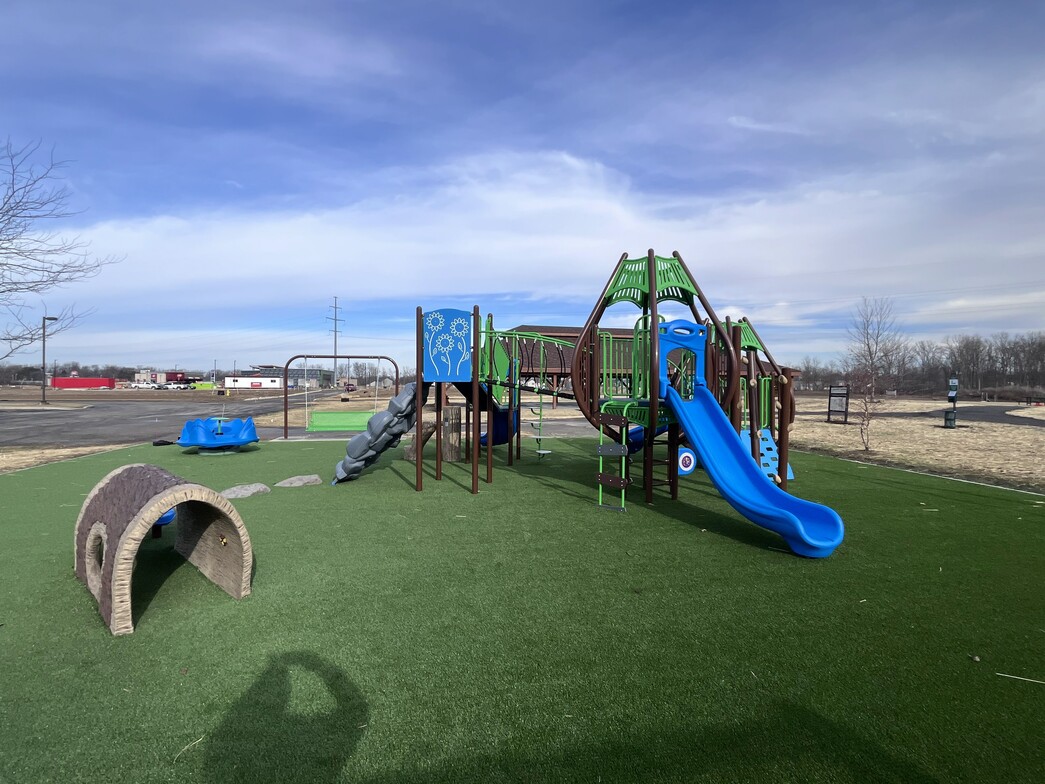
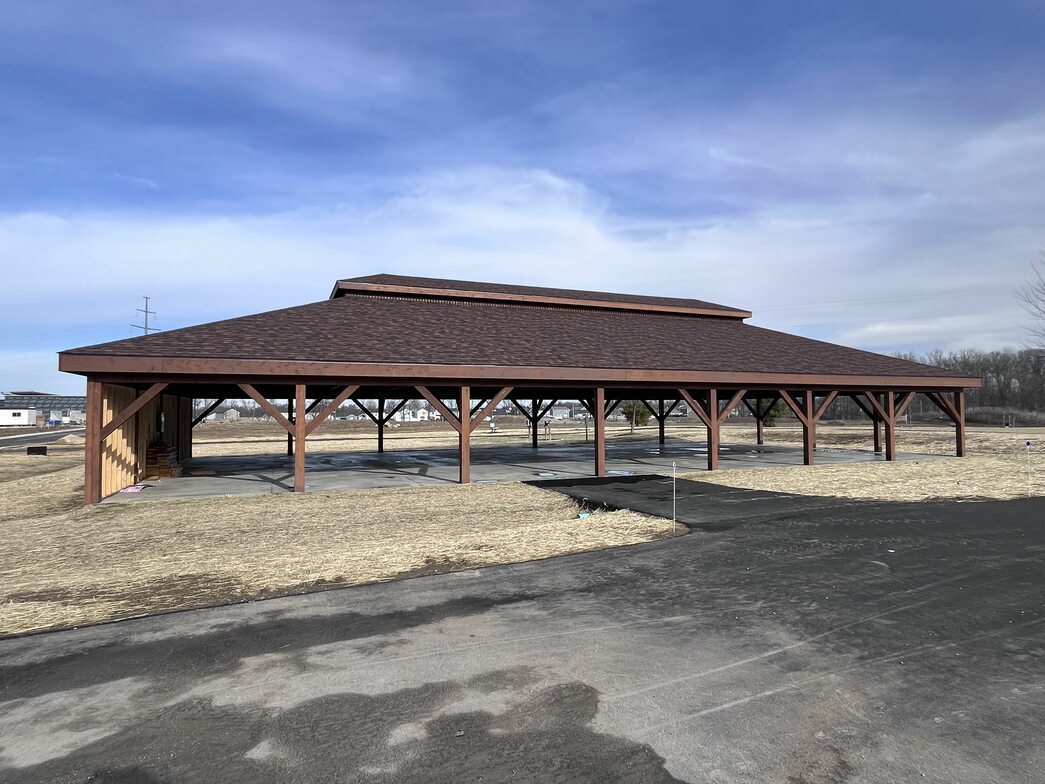
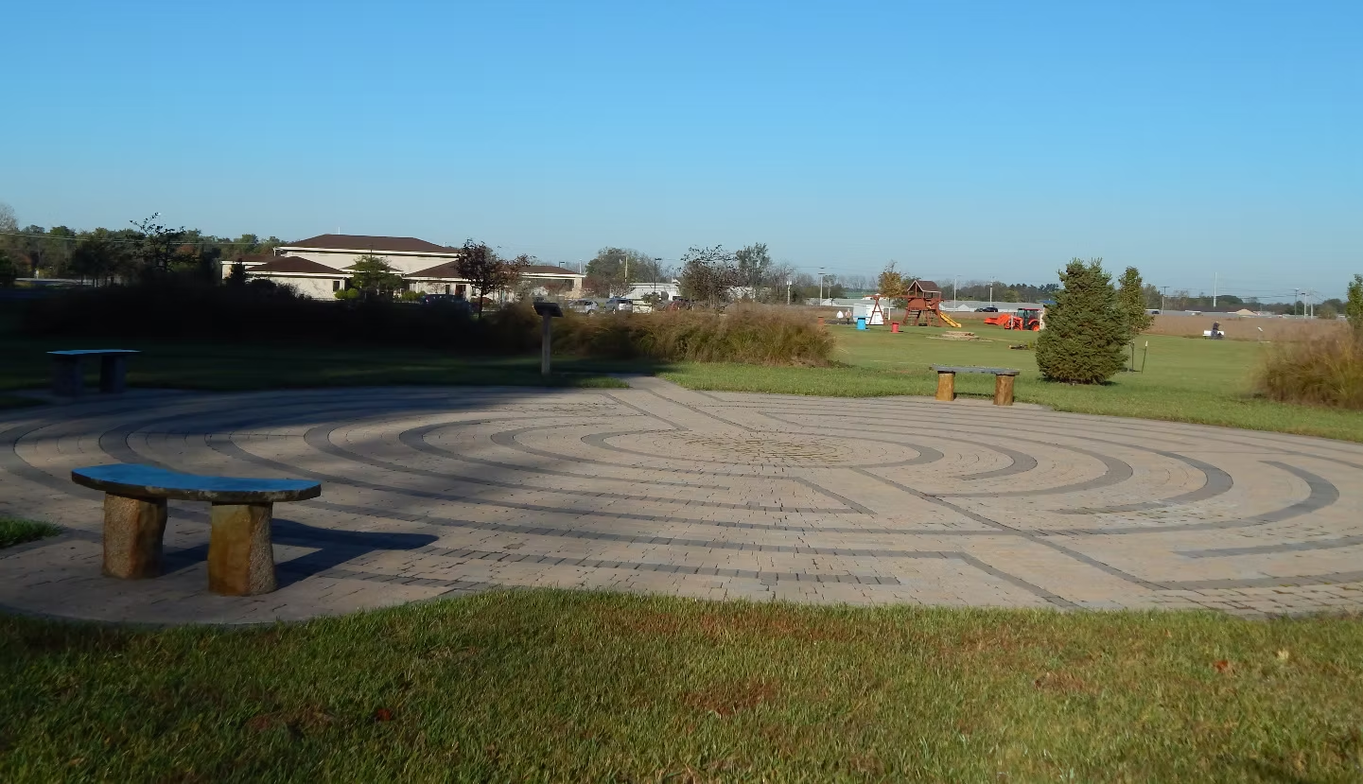
In 2015 we designed and built an outdoor labyrinth that you will find near the south east corner of the park (park at the playground and start walking toward the rear of the park. You can't miss it.). We hope you will take the time to walk the labyrinth and connect with God and find some peace. The Park is a work in progress so we are always updating and adding features. Please be respectful of the spaces, features and others who will use the park after you. Welcome and Enjoy!
The Labyrinth: How to Use
There is no right way to walk a labyrinth. You cannot make a mistake. There are no wrong turns. You cannot get lost.
- It is a journey to the center and then out again.
- Think about why you are making the journey, to slow down, to meditate, to pray…
- Pause as you enter the labyrinth. Pray if you care to.
- Walk at your own pace allowing others to pass.
- Be respectful of others on their journey, walk silently, or talk or sing quietly as to not disturb others.
- Feel free to rest on the benches along your journey.
- The center represents sacred space and the presence of God. When you reach the center, stay a moment or two and focus on the journey you just made. Leave when it seems appropriate.
- As you return to the entrance, prepare your mind to re-enter the world. You may wish to say a prayer of thanks as you take the last step.
- When we use a labyrinth, our spiritual journey and our physical journey are united.
A Labyrinth is:
- A Path for prayer and meditation
- A Tool for transformation and healing
- A Walk with your soul.
- A Metaphor for life’s journey
Walking a Labyrinth can be contemplative and serious, or fun and playful. Pray silently, sing a song, or listen to the sounds of nature around you. Take in the peacefulness of your surroundings.
The Labyrinth: A Brief History
Labyrinths are ancient circular paths that are found all over the world. Many cultures around the world and throughout time have looked to the labyrinth as a symbol of journey and spiritual renewal. Unlike a maze, there are no choices to make. There is only one path to the center and back out.
Labyrinths can be traced back over 4000 years. Earliest examples are symbols carved on rocks or painted on pottery. Some historians believe the first labyrinths were in Egypt and Etruria (central Italy). There are labyrinth designs found on coins from Crete from the first few centuries BC. Fishermen in Sweden and Finland built. Many were found in Britain and Germany carved into the turf. Hopi Indians of North America used a symbol known today as the seven-path labyrinth. The most famous medieval labyrinth is the one found in the Chartres Cathedral in France. It was constructed in the early 13th century and survives to this day.
Many early Christian churches used labyrinths as a way to make symbolic pilgrimages when they could no longer make the physical ones to their spiritual home in Jerusalem. They believed the labyrinth represents the soul’s journey to Christ.
This space is a gift to the community with love from Resurrection Lutheran Church. It was made possible by special donors, a matching grant from The Lutheran Foundation, gifts and support from Felgers and Belguard, members of Resurrection, volunteers and lots of hard work.
We hope that you enjoy your Resurrection Park labyrinth experience. We encourage you to explore more. The Labyrinth Society and Veriditas, Inc. sponsor a worldwide labyrinth locator website. Please visit: http://labyrinthlocator.com